The short version: SEO and GEO sound similar, but they don’t reward the same work. Only 12% of URLs that ChatGPT and Perplexity cite also rank in Google’s top 10 for the same query. The two disciplines overlap less than most marketers assume, and the work that wins citations from AI engines is genuinely different from the work that wins clicks from Google.
Here’s the thing. A lot of marketers I talk to assume GEO is just SEO with extra steps. Same skills, slightly different checklist. The data doesn’t agree. According to research from Position Digital, 80% of the URLs ChatGPT and Perplexity cite don’t rank in Google’s top 100 at all. It’s closer to a different game with different rules.
The biggest difference is where the work actually happens. SEO is mostly something you do on your own site. You write the page, you structure it, you build links to it. GEO is mostly something you earn off your site. About 85% of the time AI engines cite a brand, the source is a third-party site, not the brand’s own domain, according to research from Amsive. Most of GEO is won in conversations you don’t control.
This post is a companion to our AEO/GEO visibility tracker post, which broke down the five factors that drive 80% of AI citations. Here we’re focused on the prior question: how SEO and GEO actually differ, and where the budget should go in 2026.
What is the actual difference between SEO and GEO?
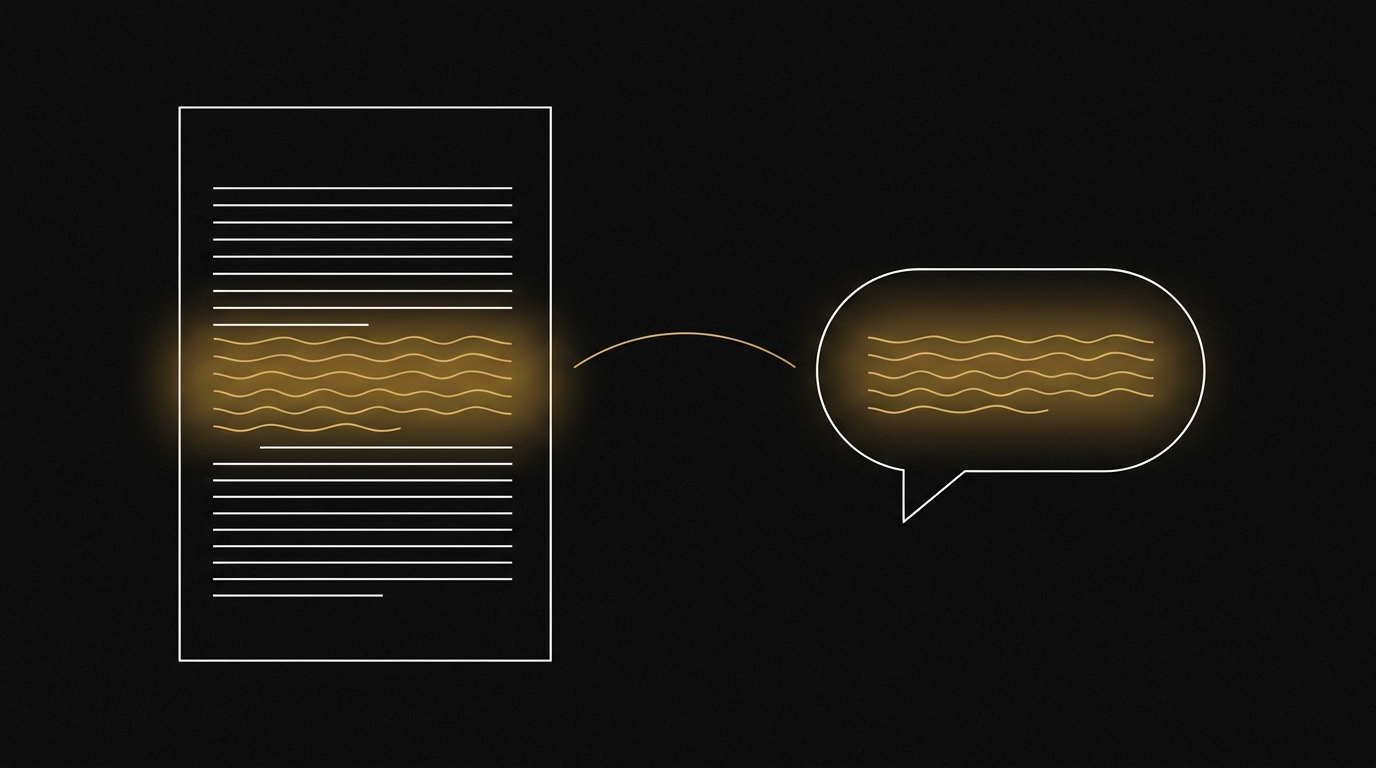
SEO is about getting a page to rank as a clickable link. GEO is about getting a chunk of your page lifted into an AI-generated answer. Google ranks whole pages, while AI engines rank short passages of usually 40 to 60 words. Once you internalize that one shift, a lot follows from it: which signals matter, which formats win, and what success even looks like.
Here’s the side-by-side.
| Dimension | SEO | GEO |
|---|---|---|
| Where the work happens | Mostly on your own site | Mostly off your site (Reddit, G2, Wikipedia, YouTube, press) |
| Optimizes for | A clickable result on a page of links | A passage extracted into an AI-generated answer |
| Unit of ranking | The page | A 40 to 60 word passage |
| Strongest signal | Backlinks and on-page relevance | Branded mentions across third-party sites |
| Key metrics | Rankings, clicks, organic traffic | Citation rate, AI Share of Voice, brand mention frequency |
| Best content format | Long-form articles, keyword-aligned headers | Tables, Q&A blocks, structured lists |
| Who tends to win | Established domains with strong link profiles | Brands that earn mentions on Reddit, G2, Wikipedia, YouTube |
Both disciplines reward credible, well-structured content. Where they really diverge is what counts as a ranking signal and what kind of artifact the engine is trying to build.
Why don’t SEO winners automatically win GEO?
Because AI engines pick passages, not pages. An article can rank #1 on Google and still get nothing pulled into ChatGPT, because the answer is buried three paragraphs in. According to Position Digital data, only 12% of URLs that ChatGPT and Perplexity cite also rank in Google’s top 10 for the same query.
That gap is the headline finding of pretty much every recent study on AI search. The Princeton/Georgia Tech GEO study on arXiv tested 10,000 queries and found the two moves that helped most were citing credible sources (+30 to 40% visibility) and adding real statistics (+30 to 40%). Neither one is a traditional SEO ranking factor.
Pages built for Google tend to fail the AI extraction test in three specific ways. They don’t answer the underlying question in the first 60 words of any section. They have no comparison table, FAQ, or list the engine can lift cleanly. And the writing is wrapped in marketing language, which AI engines actually penalize as low-trust.
Why is most of GEO won outside your own website?
Because AI engines weight what other people say about you more than what you say about yourself. The clearest single number: 85% of the time AI engines cite a brand, research from Amsive shows the source is a third-party site, not the brand’s own domain. Brands are roughly 6.5 times more likely to be cited through external sources than through their own pages.
That flips the SEO playbook upside down. SEO rewards the page you own, whereas GEO rewards the whole network of pages other people own that happen to mention you.
Ahrefs research from December 2025 explains the underlying signal. The strongest predictor of whether AI engines will cite a brand is how often that brand gets mentioned across the web in plain text. That signal is roughly six times stronger than backlinks, and stronger than how well-known your domain is. AI engines don’t need a hyperlink to count the mention. They scan Reddit threads, G2 reviews, Wikipedia entries, YouTube transcripts, and industry publications for your brand name showing up next to the topics you care about.
Here’s the part that should feel weird. When Ahrefs themselves looked at which pages were generating their own AI Overview citations, their own domain didn’t appear in the top sources. The pages winning AI citations for your brand are probably not pages you wrote.
So the work that wins GEO looks a lot more like PR and community presence than traditional on-site SEO. A G2 review counts. A Reddit thread where someone names your product as the best option counts. A Wikipedia paragraph that puts your brand next to the right category counts. The brands earning citations from AI engines are the ones consistently showing up in third-party conversations about their space.
Which content formats actually get cited by AI engines?
Tables, Q&A blocks, and structured lists. Long-form narrative loses badly. Opollo tested extraction across 120 AI queries and the gap between the best and worst formats is more than 10x.
| Content format | AI extraction rate | What it means |
|---|---|---|
| HTML tables | 34% | The single highest-performing format. Use for any comparison. |
| Q&A blocks | 29% | Question heading + a tight 40 to 60 word answer. Maps to FAQPage schema. |
| Structured lists | 21% | Bulleted or numbered. Best for steps, criteria, signals. |
| Long-form narrative | 8% | Standard blog prose. Loses to structured formats by 4x. |
| Unstructured blogs | 3% | Walls of text with no clear structure. Almost never extracted. |
The takeaway for content teams is simple. Lead each section with a question, give a tight answer (40 to 60 words) in the first paragraph, then expand from there. Drop in a table any time you’re comparing things, and turn your FAQ section into actual FAQPage schema. It’s the same argument at the same word count, but several times more likely to get cited by AI engines.
Where should marketers spend differently in 2026?
On channels that move citation rates, not just rankings. AI-referred traffic is growing 527% year over year according to Frase, and it converts at 4 to 5 times the rate of regular organic traffic per RankScience. Even at small volumes, the math is compelling.
Three budget shifts keep showing up in the data. First, move some of your link-building budget into earned mentions on Reddit, G2, Wikipedia, and YouTube. Those are the platforms that drive most AI citations. Second, invest in original research and data studies. AI engines reward real numbers and cite original sources way more often than aggregated content. That is the flywheel: you publish data, other people cite it, AI sees the mentions, AI cites you. Third, rewrite your highest-value commercial pages (homepage, product pages, comparison pages) so they are built for passage extraction. Ahrefs data shows over 80% of AI traffic lands on those pages, not on blog posts.
None of this is an argument for defunding SEO. The real point is that the work that compounds in GEO is genuinely different from the work that compounds in SEO, and a 2026 content budget that ignores that difference is leaving real citation share on the table.
Do you still need SEO if you do GEO well?
Yes. But the overlap is smaller than most people assume. Google AI Overviews still pull from the organic top 10 about 76% of the time per Amsive, so Google rankings remain the gateway to that specific surface. ChatGPT and Perplexity are different stories. They draw from an almost entirely separate set of pages, and they have less than 1% citation overlap with each other. Optimize only for Google and you will miss both.
Honestly, some work helps both disciplines and some work helps only one. Structured headings, real statistics, named authors, and clean technical hygiene help both. Backlink campaigns and exact-match keyword density help SEO almost exclusively. Branded mentions on Reddit and G2 help GEO almost exclusively. The smart move is to make every page do double duty where you can, and pick a deliberate channel mix where you can’t.
If you want a starting point, the AEO/GEO service page walks through how we structure this for clients, and our free AI Discovery Audit scores your site against the same five factors we use internally, including the structural and third-party signals that separate the sites AI engines cite from the ones they ignore.
Like this? Get the next one.
Short emails. New posts as they ship.