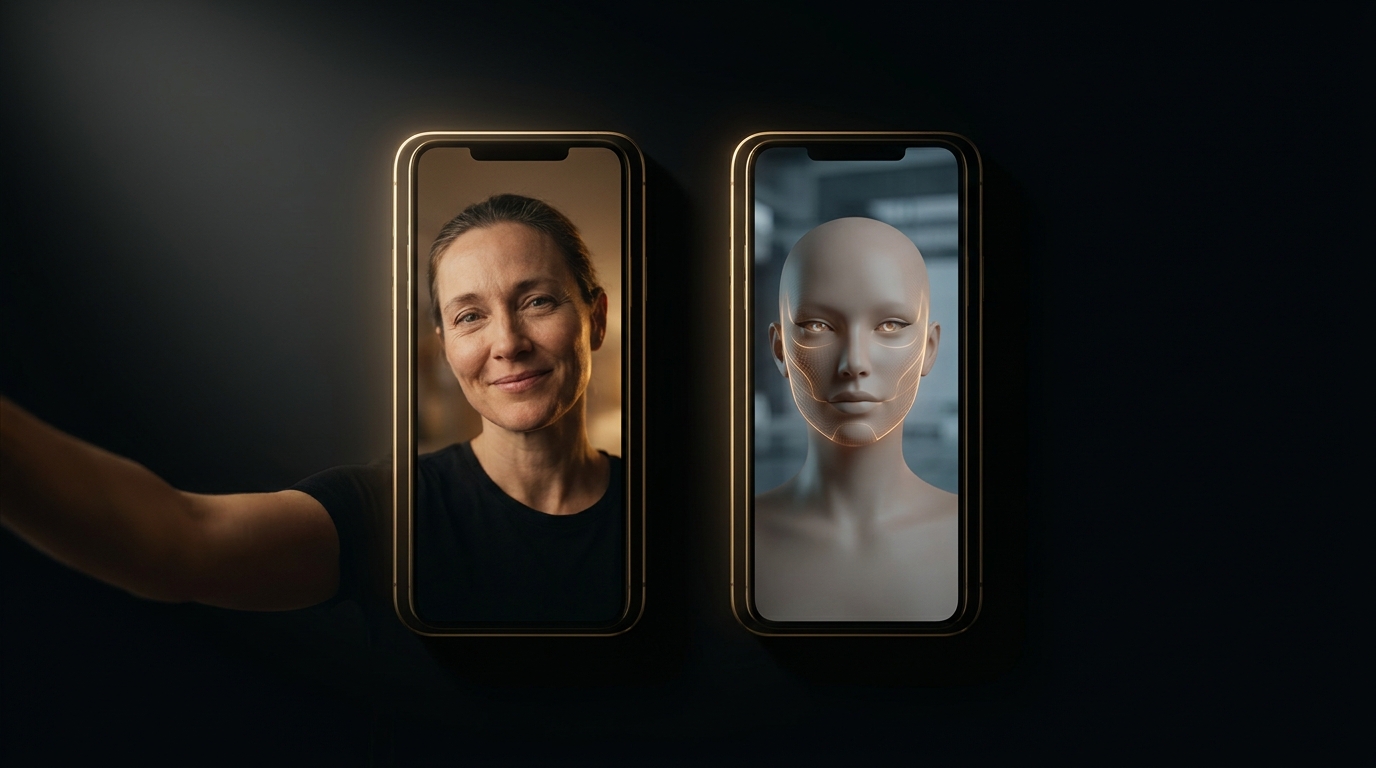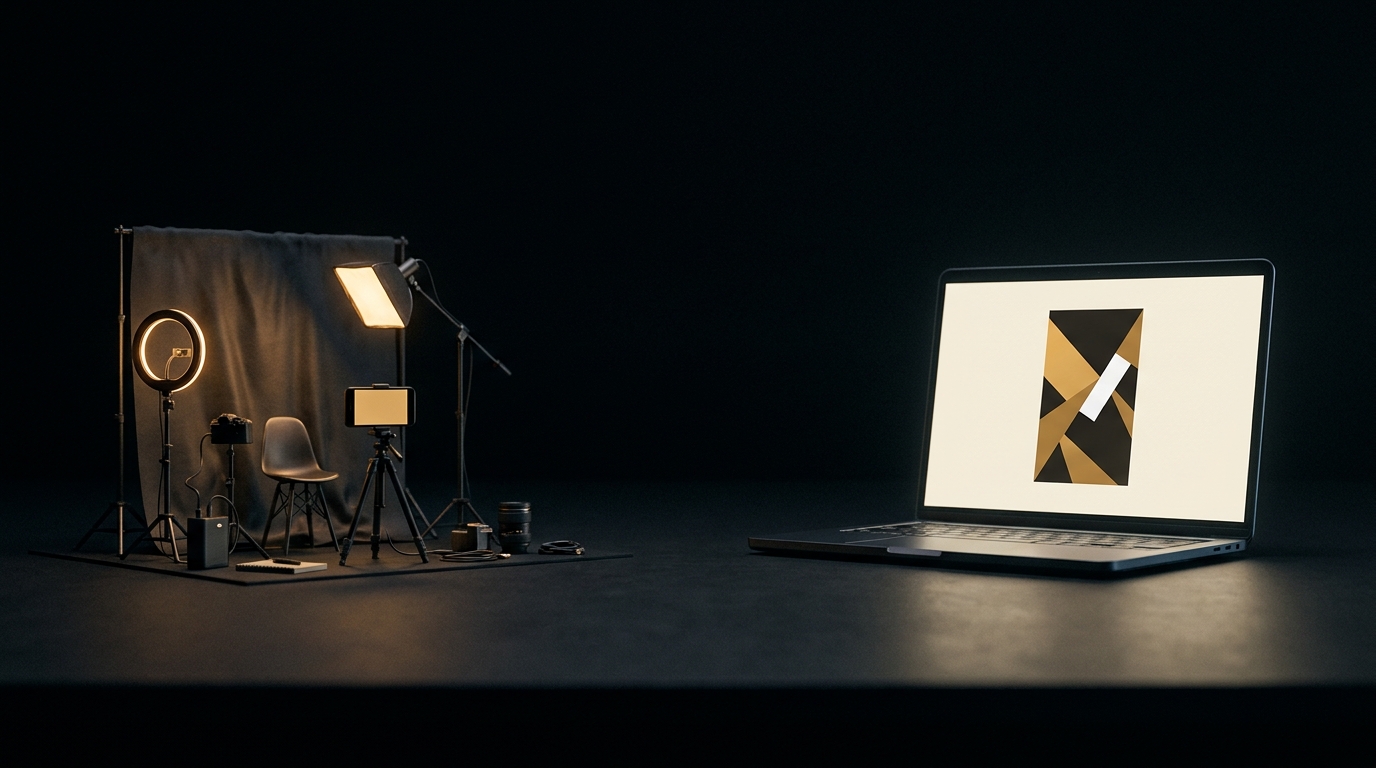
The short version: Hiring a creator for one ad variant: $500 to $2,000. Producing the same variant through an AI pipeline in 2026: $8 to $40 in tool cost, plus under an hour of human time. The savings show up in two places: lower CPA per ad (because you can afford to test more variants) and faster iteration (because you can replace a losing hook the same day instead of next month).
$500 to $2,000 for one ad variant from a creator. $8 to $40 in tool cost for the same variant through an AI pipeline. Every cost comparison post leads with that arithmetic, and most of them stop there, which is where they go wrong. Tool cost is the easy line item. The full math has to include the things that never show up on a Stripe invoice: briefing, review, the analytics work to know which variant won. None of that disappears when you switch to AI.
So the useful question was never whether AI creative beats a creator on price. Of course it does. What you need to know is how much cheaper it stays after you account for everything, and that is what this post works out.
What does one ad variant cost in 2026?
Three production paths, three very different price tags. The numbers below are 2026 ranges drawn from what we see across client accounts and our own production work. We pitched them to the middle, not to whatever makes the AI case look best.
| Path | Cost per finished 9x16 variant | Time per variant | Why |
|---|---|---|---|
| Hiring a creator | $500 to $2,000 | 5 to 10 days | Talent fee, product shipping, brief loop, footage delivery, edit time |
| Traditional creative agency | $1,500 to $5,000 | 2 to 4 weeks | Account management, casting, shoot day, editor fees, revision rounds |
| AI pipeline (raw tool cost) | $8 to $40 | 30 to 60 minutes of human time | API spend on GPT Image 2, Seedance 2.0, Lovart batching |
The AI pipeline number is “raw tool cost.” That is the part most cost comparisons stop at, and it is misleading on its own. The full math is below.
The full cost of hiring creators
Creator-shot creative looks cheap on paper because the creator quotes a single dollar amount. The full cost stack adds up faster than most marketing leads expect. According to Influencer Marketing Hub’s TikTok rate benchmark, working creators in the nano-to-mid tier charge $200 to $1,250 per branded video, before any of the production overhead listed below kicks in.
- Talent fee. $300 to $1,500 per variant for working creators. More for known creators with audience.
- Product shipping and seeding. $20 to $200 per shipment, plus the lost margin on the product itself.
- Brief loop. 2 to 5 hours of an internal creative lead’s time per variant.
- Footage review and editor handoff. 1 to 3 hours per variant.
- Editor or in-house cut. $100 to $500 per finished cut.
- Revisions. 0.5 to 2 rounds, each adding $50 to $200.
Add it up: $500 on the low end, $2,000 on the high end. Per variant. For 20 variants in a sprint, that is $10,000 to $40,000 just for production, before media spend.
The full cost of an AI pipeline
The tool cost is the small part. Here is the full stack.
Per-variant API and tool cost ($8 to $40):
- GPT Image 2 image generation: $0.10 to $0.40 per usable still, with 4 to 12 generations per finished variant
- Seedance 2.0 animation: $2 to $8 per finished video
- Lovart batching layer: covered by subscription, not per-variant
- Codex CLI usage: covered by subscription
Monthly fixed cost ($300 to $800):
- ChatGPT Plus or API plan with Codex access: $20 to $200
- Lovart subscription: $50 to $200
- Seedance 2.0 access (via fal.ai or direct): $100 to $400
- Optional: Claude Code Pro for the creative director agent: $20 to $200
Hidden human cost (the real number):
Cost comparisons skip this line item, and it ends up being the largest one in the whole AI pipeline.
- Creative direction (1 to 3 hours per sprint, regardless of variant count). A sprint of 12 variants costs the same direction time as a sprint of 4, because the AI never touches this part.
- Prompt iteration on the first 2 to 3 sprints: 3 to 8 hours of learning curve before the workflow stabilizes
- Variant review and selection: 30 to 90 minutes per sprint
- Performance analysis and feedback to the next sprint: 1 to 2 hours per sprint
If you assume an internal creative lead at $80 to $150 an hour, the human cost runs $400 to $1,500 per sprint of 12 to 20 variants. That works out to $20 to $125 per variant in human time, on top of the $8 to $40 in tool cost.
The all-in total
For a team producing 20 variants per sprint, here is the all-in monthly cost comparison if you are running 4 sprints a month (roughly 80 variants total).
| Path | Total monthly cost | Cost per variant |
|---|---|---|
| Hiring creators (80 variants) | $40,000 to $160,000 | $500 to $2,000 |
| AI pipeline (80 variants, in-house) | $2,000 to $7,000 | $25 to $90 |
| AI pipeline (80 variants, agency-managed) | $5,000 to $15,000 | $60 to $190 |
The AI pipeline costs roughly 5 to 15% of the creator-shot pipeline at the same variant count. Or, framed differently, you can produce 5 to 15 times more creative against the same budget.
When AI performance creative is not cheaper
Three scenarios where the math gets uglier.
Hero brand work where one shot needs to be perfect. AI-generated stills are great at scale but the curation cost and approval cycles for a single hero campaign asset can eat the savings. For these jobs, a real shoot is often still the right call.
Categories where audience trust matters more than volume. Healthcare, financial services, anything regulated. A real face in a real testimonial carries weight a generated face does not, regardless of photorealism. The cost difference does not matter if the creative cannot run.
Brands without a strong creative point of view. Without a human creative director driving the brief, the AI pipeline produces generic output and the savings turn into wasted ad spend. The tools assume you walk in with a strategy; they will not hand you one.
What the savings unlock
Nobody runs this pipeline to pocket the savings. The savings are only interesting for what they let you do next.
A $40,000 monthly creative budget that produced 4 to 8 variants now produces 80 to 100. TikTok and Meta both reward creative volume more than creative quality past a baseline. TikTok’s own creative best-practices guidance recommends refreshing creatives every 7 days and testing multiple hooks per campaign, which is only economically possible with an AI pipeline producing variants at this cost. The accounts that test more variants find their winners faster. The 50% CPA drop we documented in our recent campaign was driven primarily by the volume of variants we could afford to test, not the quality of any single variant.
The other unlock is iteration speed. When a hook tests well, you can ship a new variant the same day; when it dies, you swap in a replacement the same afternoon. The old pipeline measured iteration in weeks. This one measures it in hours.
Up next: The Playbook. This is the economics chapter. The full hub, The AI Performance Creative Playbook, covers the workflow, the 2026 tool stack, when AI creative is not the right call, and the first 30 days of standing this up inside a growth team.
If you want to talk through what your specific cost structure would look like, that is exactly what our AI performance creative service is built around.
Like this? Get the next one.
Short emails. New posts as they ship.