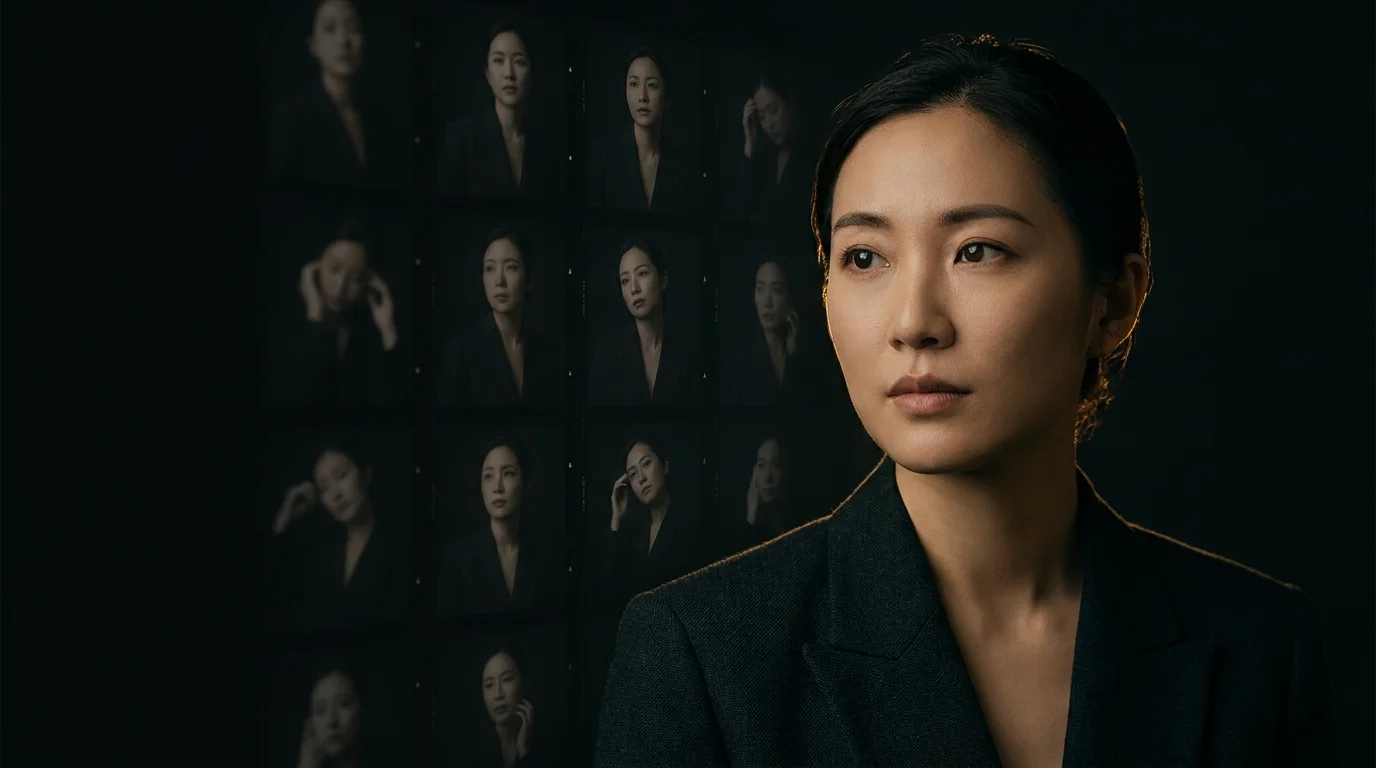
AI performance creative means using AI to make versions of ads, then testing which versions bring in customers at a workable cost. A person chooses the idea and reviews the work. Campaign results guide what the team makes next.
The short version: Our workflow uses GPT Image 2 for images, Seedance 2.0 for animation, and Lovart for batches of video. A human creative director owns the brief. Budget for direction, review, and performance analysis as well as the tools; cheap generation alone does not make an effective ad.
This playbook explains the workflow, its total costs, and when real creators or a traditional shoot remain the better choice. The 30-day checklist shows how a team can start without changing its entire production process at once.
What is AI performance creative?
AI performance creative is the discipline of producing high-volume ad creative using generative AI tools (image, video, copy) under the direction of a human creative lead, then testing those variants against performance metrics like CPA, ROAS, and CTR. It pairs the speed and volume of generative AI with the strategic point of view of a human director, so the output is both efficient and on-brief.
The category is sometimes confused with “AI ad creative” or “AI-generated ads,” but the distinction matters. AI ad creative describes the output. AI performance creative describes the discipline: the pipeline, testing cadence, and feedback loop between media performance and the next round of generation. Without that loop, you are generating images. With it, you are running a creative system that learns from its own outputs.
The category emerged over the past 12 to 18 months as image and video models crossed the threshold of “indistinguishable from a real shoot” for paid social formats. The 9x16 vertical ad on TikTok and Reels is the dominant proving ground, because the formats are short, the production volume is high, and the audience tolerates handheld-feeling footage. According to TikTok’s own Creative Center guidance, advertisers should refresh creative around every 7 days, which is the cadence AI pipelines were built to support.
What separates AI performance creative from generic “use AI to make ads” advice is the operating model around it. We run our pipeline through the Acceleration Framework™: a sprint cadence with a human creative director, a Claude Code creative director agent, a generation step in Codex, and an animation batch step in Lovart. Each layer has a defined input, output, and owner. The framework makes the workflow auditable, and it is why the same setup can produce consistent results across very different brands.
How does the workflow run?
The pipeline has three steps and one principle: a human creative director owns the brief, but everything downstream of the brief is now AI. Direction happens in Claude Code with a creative director agent. Image generation happens in Codex with GPT Image 2. Animation happens in Seedance 2.0, batched through Lovart. Total human time per finished 9x16 variant is under an hour.
We documented the full pipeline, with sample avatars and the campaign that dropped CPA roughly 50%, in our post on the AI performance creative workflow. Here is the short version against the legacy creator-shot pipeline, plus the hybrid model some teams are running while they transition.
| Dimension | Old creator workflow | AI workflow | Hybrid |
|---|---|---|---|
| Time per variant | 5 to 10 days | Under 1 hour of human time | 1 to 3 days |
| Cost per variant | $500 to $2,000 | $8 to $40 in tool spend | $150 to $600 |
| Iteration speed | Weeks per round | Same-day swap on a losing hook | Days per round |
| Variant ceiling per sprint | 2 to 4 | 12 to 20 | 6 to 10 |
| What the human owns | Brief, casting, edit notes, revisions | Brief and curation only | Brief, light shoot, curation |
Most teams use the hybrid model in 2026. They keep one or two real creators on retainer for major campaign assets and use AI for the smaller variants that test hooks. Creators still have a role; they no longer need to produce every test.
The principle that holds the pipeline together is that the brief sits upstream of every generation step. If the brief is “woman, 28, talks about loneliness,” the output will be flat. If the brief is “Korean woman lying in bed at 3am, hands over her mouth, embarrassed about how much she narrates her life inside her own head,” the output is a specific human moment. Same model, different ceiling. The agent helps draft variants, but the human owns the angle and emotional beat.
Before drafting a new brief, use competitor ad analysis to find angles worth testing.
Why did production get cheap (and attention didn’t)?
This is the part that confuses most growth leads when they first stand the pipeline up. AI is pushing the cost of building software, content, and ad creative toward zero, but human attention is fixed. When every team in your category can produce 80 variants a month, volume stops being the moat. The real differentiator becomes creative direction (what to test) and testing velocity (how fast you find the winner). We made the argument at length in our essay on why AI made building free but did not make attention free.
Cheaper tools make production available to more teams. Good judgment stays scarce: someone must understand the audience, write a strong hook, and decide what to stop or scale. That changes both whom you hire and how you measure the work.
Hire for creative direction, not production. A year ago the bottleneck was an editor or a creator. Today the bottleneck is the person who can read account data, spot a fading hook, write a sharper brief, and guide the agent toward specific human moments instead of stock-photo output. That person is rare. They are the role to hire for in 2026, not another editor.
Measure what you test, not what you ship. The teams getting compounding returns run a measurement loop where every sprint feeds the next brief. CPA per variant, hook retention rate, scroll-through, hold time. Without that loop, cheap production creates more noise faster. With it, the noise turns into a creative system that sharpens every sprint. We cover the testing-cadence side of this in our Meta ads 2026 creative testing post.
That is how to think about the costs below. Cheaper production gives you room to fund the direction and testing that still need people. Cutting the budget without protecting that work can erase the benefit.
What does AI performance creative cost?
The headline comparison below is based on 2026 ranges we see in client accounts and our own production work, not vendor pitch decks. The full breakdown lives in our post on AI performance creative cost.
| Path | Total monthly cost (80 variants) | Cost per variant |
|---|---|---|
| Hiring creators | $40,000 to $160,000 | $500 to $2,000 |
| AI pipeline (in-house) | $2,000 to $7,000 | $25 to $90 |
| AI pipeline (agency-managed) | $5,000 to $15,000 | $60 to $190 |
The number that surprises growth leads is not the per-variant cost. It is what disappears at the same time: the brief loop, casting calls, revision rounds, editor handoff, and calendar blocks waiting on raw footage. Those line items are not on a Stripe invoice, but they are the work blocking iteration speed in most accounts today.
Teams often treat tool spend per variant as the full cost, even though it is the smallest part. Budget for all three layers below, especially the human time that is easy to miss:
- Per-variant API and tool cost: the figures in the table above
- Monthly fixed subscriptions: $300 to $800 (ChatGPT Plus or API plan with Codex, Lovart, Seedance access via fal.ai or direct, optional Claude Code Pro)
- Hidden human cost: $400 to $1,500 per sprint (creative direction, prompt iteration on the first 2 to 3 sprints, variant review, performance analysis feeding the next sprint)
The hidden human cost is the largest cost in the AI pipeline once you are at scale. The tools assume strategy without providing any. Budget for the human layer, or the pipeline produces generic output and the savings turn into wasted ad spend.
What is the 2026 tool stack?
With those costs in mind, choose tools for three jobs: images, video, and prompts. Our defaults shift every six months, but each job stays much the same. We test new tools every quarter before changing what we use in production. For an independent third-party view of how the current models stack up across speed, quality, and cost, Artificial Analysis maintains a live image-model leaderboard that we cross-reference before changing our defaults.
Image generation
GPT Image 2 (the image model in OpenAI’s GPT 5.5 family) is our 2026 default for performance creative. We access it through the Codex CLI rather than the chat app so we can script batches and version-control prompt files. The other two we test regularly are Flux 2 and Midjourney v7, and each has a job it does better than GPT Image 2.
| Model | Where it wins | Where it fails |
|---|---|---|
| GPT Image 2 (default) | Character consistency across a batch, prompt adherence, re-rolling one variant without rerunning the whole set | Pure photorealism, a beat behind Flux on skin and lighting fidelity |
| Flux 2 (backup) | Hero stills where raw photorealism matters more than batch control | Character drift across a 10+ variant sprint |
| Midjourney v7 (hero only) | Most cinematic single image of the three | Discord-only workflow blocks scripting and version control, a non-starter for performance testing |
The full head-to-head we ran across 12 internal briefs is in our post on the best AI image model for ads in 2026. The short version: GPT Image 2 wins four of five lenses (consistency, prompt adherence, batch control, cost per usable variant), Flux wins on raw photorealism, Midjourney is a hero-image tool that does not scale for testing.
Video and animation
Seedance 2.0 is our default animation layer. It is the best model we have tested at preserving the face across frames, which is the whole game for 9x16 ad video. If the face drifts between the first and last second of the ad, the algorithm and the audience both notice. We run it through Lovart, which queues the batch and returns finished video without a human watching renders.
The category to keep an eye on through 2026 is sound-aware video models that generate dialogue and lip sync in one pass instead of two. We have not seen one yet that we trust for performance work. We will revisit when we do.
Prompt engineering
This is the part most teams underinvest in. The prompt is the asset, not a throwaway message. We maintain a prompt library, version-controlled in the same repo as the rest of the project, with named templates for each character archetype, lighting setup, and emotional beat we use in production.
The companion piece on the actual prompts we use, including the structured prompt format that produces consistent character avatars across a batch, is our guide on how to prompt GPT Image 2 for ad avatars. If you are standing this workflow up from scratch, that post is where to start on the prompt side.
When is AI performance creative NOT the right call?
Three scenarios. Hero brand campaigns where one shot needs to be perfect, regulated categories where audience trust matters more than volume, and brands without a strong creative point of view at the top of the pipeline. We expand on each below, and we go deeper on the trade-offs in the cost post.
Hero brand work where one shot needs to be perfect. AI-generated stills are great at scale, but the curation cost and approval cycles for a single hero campaign asset (the launch frame, the homepage hero, the keynote backdrop) can eat the savings. For these jobs, a real shoot is often still the right call. The economics flip the moment you are producing one image instead of fifty.
Regulated or trust-sensitive categories where a real face matters. Healthcare, financial services, and other categories scrutinize claims and faces. Some audiences are also hostile to synthetic media, even outside regulated industries. A real testimonial carries weight a generated face does not, regardless of photorealism. TikTok’s AI-generated content guidance requires labels for realistic AI-generated images, audio, and video. The cost difference does not matter if disclosure or audience skepticism keeps the creative from working.
Brands without a strong creative point of view. Without a human creative director driving the brief, the AI pipeline produces generic output and the savings turn into wasted ad spend. We have seen this in accounts: a team adopts the tools, fires the creative lead to “save money,” and then watches CPA drift up over the next quarter. The tools assume strategy. They do not provide it. If your team does not have someone who can write a sharp brief and read performance data, fix that before you change the production pipeline. The order matters.
Before choosing a production method, answer these three questions. We use them to decide whether a concept suits the AI pipeline or needs a real shoot.
| Question | Answer that says "AI pipeline" | Answer that says "real shoot" |
|---|---|---|
| How many variants do we need? | 10+ for testing | 1 to 3 hero assets |
| Is the category or audience trust-sensitive? | No, or disclosure is accepted | Yes, claims or synthetic faces face scrutiny |
| Does the brand have a creative POV? | Yes, with a director who can write briefs | No, still finding the voice |
If you get three “AI pipeline” answers, run the AI pipeline. If you get three “real shoot” answers, do not force AI solely because it is cheaper. If you get a mix, run hybrid: AI for the testing tail, real shoot for the hero.
The starter checklist: your first 30 days
If AI fits the work, start with the month below. Each stage takes roughly one week, with one dedicated person and a creative director contributing a few hours. Follow the order so the first sprint has both a brief and a measurement plan.
Week 1: pick a model, build a baseline.
- Pick one image model as your default (GPT Image 2 if you want our 2026 recommendation) and one video model (Seedance 2.0).
- Stand up access. ChatGPT Plus or API plan with Codex CLI, Lovart subscription, Seedance access via fal.ai or direct.
- Run your first 4 to 8 generations against a simple brief to see the output. Do not ship anything yet. The goal is to understand the pipeline.
- Document what worked and what did not in a shared doc. This becomes your prompt library.
Week 2: build a prompt library and a creative director agent.
- Create a versioned prompt library with named templates per character archetype, lighting setup, and emotional beat you expect to use.
- Pair your creative director with a Claude Code agent in the same workspace. Give it the brand voice, the audience persona, and the current ad concepts as context.
- Write three full briefs for the next sprint. Use the agent to draft variants of each. Have the human director cut and rewrite.
Week 3: ship a sprint, instrument measurement.
- Generate 12 to 20 variants across 3 to 5 concepts. Animate through Seedance, batched in Lovart.
- Ship the sprint to one ad set on Meta or TikTok with a clean test structure. Match the spend per variant so the measurement is comparable.
- Stand up the measurement layer: CPA per variant, hook retention, scroll-through, hold time. Every variant gets a row. The sprint output is data, not just creative.
Week 4: read the data, scale what works, retire what does not.
- Run a sprint review at the end of week 4. What hooks held attention? What avatars converted? What concepts died?
- Promote 2 to 4 winners into broader testing with adjacent variants. Retire the losers and use what they taught you to write the next sprint’s brief.
- Lock in a sprint cadence (weekly or biweekly is the sweet spot) and put the sprint review on the calendar as a recurring meeting.
After the first 30 days, the workflow is in place. The next 90 days are where the compounding starts. Each sprint sharpens the prompt library, the creative director’s read on what works, and the testing structure. By month 4, most teams we work with are running 5 to 10 times more variants per month than they could before, and the CPA numbers start to reflect it.
Where this fits in the broader paid media picture
AI performance creative is the production-layer answer. The strategy-layer answer is broader: how AI changes media buying, audience targeting, attribution, and the operating model of the growth function. We covered that in the broader Paid Media with AI framework, the companion pillar to this one. If the production workflow is already solved for you, that piece is the next one to read.
The two frameworks work together. AI performance creative speeds up production, while the Paid Media with AI framework guides spending and campaign structure. Most teams need both, with results from the paid account shaping the next creative brief.
How does The Remarkable run AI performance creative?
The Remarkable runs the workflow in this playbook as a managed engagement. Our AI performance creative service brings together creative direction, the prompt library, production sprints, and campaign measurement.
People review each concept and variant before launch, and campaign results guide the next brief. We agree on concepts, formats, and the review cadence before work starts.
You do not need to redesign the whole production process to start a useful conversation. We can help you choose where AI fits first. Our team connects the creative idea to a test your account can learn from, with a scope that fits your production needs.